

Faculty of Social Science and Humanities Case for Support

As our world rapidly advances with technology, it is more important than ever to be mindful of how society shapes technology and vice versa.
Through research and teaching grounded in a social lens, the Faculty of Social Science and Humanities (FSSH) ensure innovation reflects human values, not just technical possibility.
We ask the critical questions others overlook: Whose values are embedded in technology? Who is left behind? What are the social and environmental costs of progress? While we have the tools to build a sustainable future, ethical considerations must guide how technologies are designed, implemented and experienced.
Through interdisciplinary collaboration, community engagement and a deep commitment to equity, justice and sustainability, FSSH ensures technology remains human-centred.
With your support, we will continue to unlock exciting possibilities, energize ethical change and shape a future in which technology serves as a force for good.
Explore the Faculty of Social Science and Humanities Case for Support
Tech with conscience
Revolutionizing the legal landscape
Ontario Tech researchers and students are tackling systemic injustice at the intersection of law, technology and human rights, producing evidence-based insights that help reduce bias, strengthen accountability and guide the ethical use of emerging tools like AI in policing and the justice system.

While the justice system is meant to safeguard rights, systemic inequities and new technologies like AI can amplify harm without careful oversight. FSSH researchers and students work with law enforcement, policymakers and academic partners to reduce bias and inequitable outcomes through evidence-based research and reform. Faculty are developing ethical and legal guidance for tools like facial recognition in policing, and applying neuroscience and forensic psychology to improve decision-making and limit ineffective practices. This includes research on systemic racism and predictive AI in criminal justice, and trauma-informed approaches to interviewing vulnerable youth. Together, these efforts equip students and communities with best practices to navigate the evolving relationship between technology, law and society.

Your support will allow us to:
- Establish a Forensic Psychology Research Chair and endowment to drive cross-disciplinary research in social justice, law, ethics and emerging technologies.
- Attract top-tier researchers to tackle urgent issues in ethical technology use in law enforcement and legal procedures.
- Create high-impact learning experiences by connecting students with leading experts and involving them in research that informs real-world policy and practice.
- Fund postdoctoral research in forensic psychology, technology, law and justice, expanding the talent and evidence base needed for lasting change.
- Reduce financial barriers for early-career researchers so they can build networks, deepen their work, and deliver new advancements that improve justice outcomes.


Tech with a conscience
Verifying the green energy promise
As Canada moves toward net-zero, Ontario Tech’s Faculty of Social Science and Humanities is asking the question that matters most: who benefits and who gets left behind. Through leading research on the social, legal and ethical realities of the energy transition, FSSH is helping shape fair, accountable policy and governance so emerging technologies and resource demands drive a sustainable future that is equitable for communities in Canada and around the world.

As the world accelerates toward a net-zero future, FSSH is asking who gets left behind and what it takes to make the transition fair. From the ethics of sourcing precious minerals to the risks of exploitation, displacement of Indigenous Peoples and unequal economic impacts, researchers examine how political, legal, cultural and social systems shape outcomes. Ontario Tech is a national leader in social science research on energy and sustainability, advancing environmentally sound governance aligned with the UN’s 2030 Sustainable Development Goals and helping proactively shape policy before new technologies scale. Leaders such as Dr. Peter Stoett and Dr. Timothy MacNeill contribute influential research and advocacy in areas including climate justice, biodiversity and inequality, supporting evidence-based recommendations that hold institutions accountable and guide Canadian and international policy toward an equitable, well-planned energy transition.

Your support will allow us to:
- Establish an Energy Policy Research Chair and Endowment to position FSSH as a leading hub for energy policy research excellence.
- Evaluate what is working in today’s policies and identify where changes are needed to reduce harm and improve outcomes.
- Study the social and environmental impacts of the energy transition, including job displacement and effects on carbon-dependent communities.
- Fund postdoctoral fellows and attract top early-career talent by removing financial barriers that limit research potential.
- Expand student research and industry-connected learning opportunities that build a socially conscious workforce for the net-zero economy.

Tech with a conscience
Charting the course for a human-centric digital future
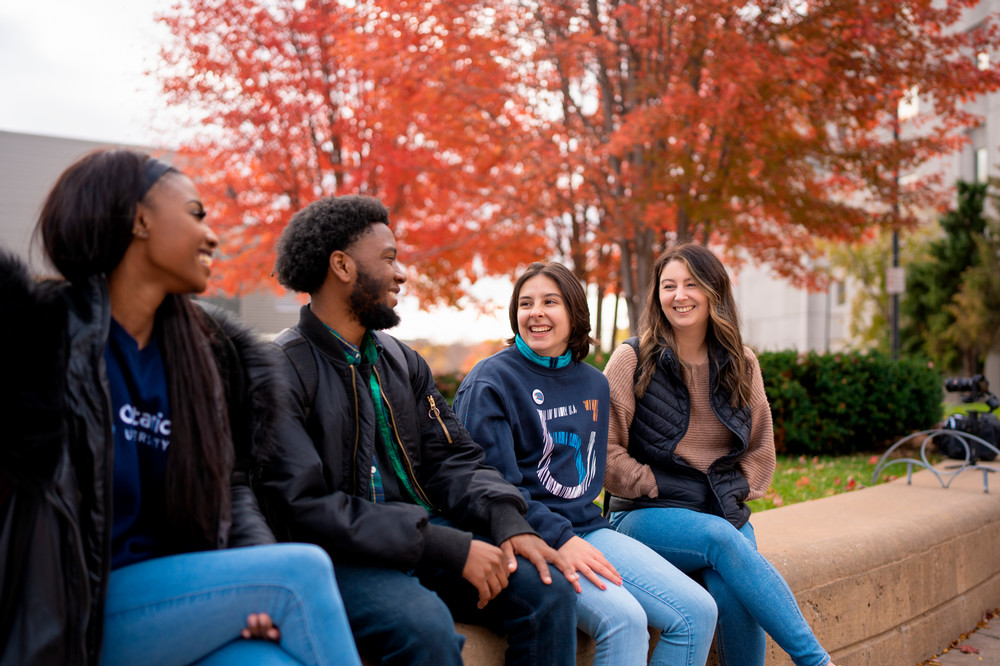
As digital technologies and AI reshape everyday life, the Digital Life Institute brings scholars together to ask the hard questions about ethics, equity and human impact, ensuring innovation advances with conscience, not consequences.


Your support will allow us to:
- Establish the Impact of AI Research Chair within the Digital Life Institute to lead high-impact research on AI’s effects on seniors, the metaverse, education and sustainability.
- Expand cross-disciplinary collaboration that connects social science, humanities and technology to address AI-driven inequities and discrimination.
- Create more hands-on research and learning opportunities for students to study AI’s real-world impacts and develop responsible solutions.
- Develop practical tools and resources that improve equitable access to AI literacy and education for diverse communities.
- Inform and advocate for inclusive, ethical local, national and international policies as AI technologies evolve.


Tech with a conscience
Combating hate around the globe
Ontario Tech's Centre on Hate, Bias and Extremism (CHBE) monitors trends, informs policy and provides training to law enforcement, educators and community leaders, while giving students hands-on experience in prevention and intervention. The CHBE brings together researchers and students to track emerging threats, study the roots of hate and translate evidence into practical tools for communities, educators, law enforcement and decision-makers. Led by Dr. Barbara Perry, CHBE advances awareness, training and partnerships, including work to address online hate, to help build a safer, more inclusive society.

Hate-motivated crime is rising, and Canada saw a 72 per cent increase in police-reported hate crimes from 2019 to 2021, targeting people based on religion, sexual orientation, race or ethnicity. The Centre on Hate, Bias and Extremism (CHBE), led by Dr. Barbara Perry, UNESCO Research Chair in Hate Studies, brings students and researchers together to investigate the roots of hate, bias and extremism and translate findings into evidence-informed policies, programs and prevention strategies. With support from partners like Public Safety Canada, CHBE has monitored right-wing extremism in Canada since 2012 and shares expertise with national and international collaborators, including parliamentary committees. Through training for practitioners, public education, and knowledge mobilization, and initiatives such as the Global Network Against Hate created with Meta, CHBE serves as a leading hub for research, awareness and solutions that help counter hate locally and globally.


Your support will allow us to:
- Strengthen CHBE’s core infrastructure so the centre can expand research, staffing and impact.
- Increase student involvement in community-based research that informs real-world responses to hate.
- Expand prevention and intervention initiatives that equip communities to address hate and violent extremism.
- Grow partnerships and knowledge-sharing across sectors, including the Global Network Against Hate and its biannual convenings.
- Amplify public education and advocacy by disseminating evidence-based tools, best practices and research findings that guide policy and practice.


Learning re-imagined
Leveraging social media for social good
Creators4Change is Ontario Tech’s hub for ethical digital storytelling, where students learn to use podcasts, streaming and social media to inform, inspire and drive social change. With industry-grade tools, expert mentorship and community partnerships, the Studio helps emerging creators turn big ideas into compelling content that advances equity, sustainability and a more just public conversation.
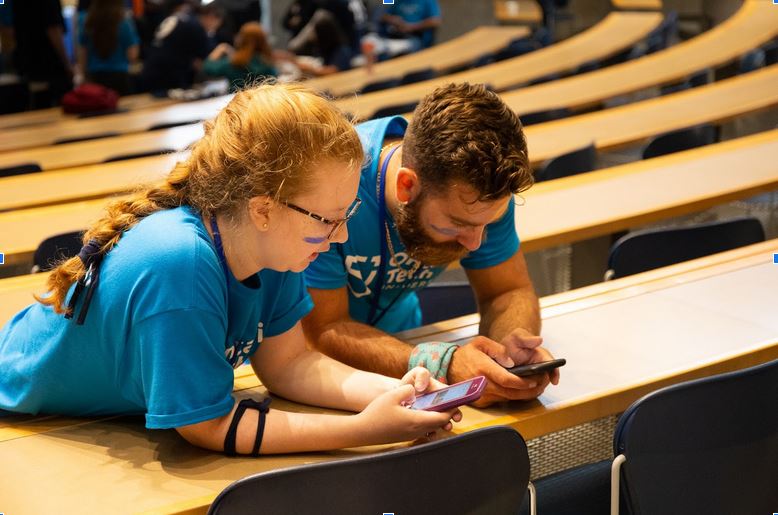
Storytelling shapes how communities share knowledge and build connections, and social media has transformed it. In FSSH, researchers and students examine the ethical and social impacts of emerging platforms and explore how digital tools can support democracy, environmental sustainability and meaningful lives. That work comes to life through the Creators4Change Studio, a joint initiative with the Faculty of Education that supports mission-driven podcasters, streamers and creators with industry-grade equipment, rights-cleared resources and expert mentorship. Guided by faculty leaders such as Dr. Emilia King and Dr. Tanner Mirrlees, and strengthened through events like the Creators4Change Symposium and partnerships with Brilliant Catalyst, the Region of Durham and arts and community organizations, the Studio equips students to use social media for good.


Your support will allow us to:
- Donor funding will strengthen the Studio’s resources and infrastructure, giving students better tools and space to innovate.
- More undergraduate and graduate students will access competency-based learning and hands-on research in digital media and storytelling.
- Expanded support will help students develop and launch creator-practitioner projects that educate the public and inspire action on critical issues.
- Investment will enable new curriculum development and attract exceptional students, faculty and staff to grow this area of expertise.
- Donors will help scale initiatives like the eight-week Podcast Incubator, building students’ entrepreneurial skills in concept development, storytelling and audience growth.


Shaping the future of transformative research and education at the intersection of social justice, law and technology.
Related news

From podcast to television: the importance of trust and responsibility in storytelling

Community Day celebrates connection, innovation and impact at Ontario Tech

Tech with a conscience: Why purpose and responsibility matter more than ever
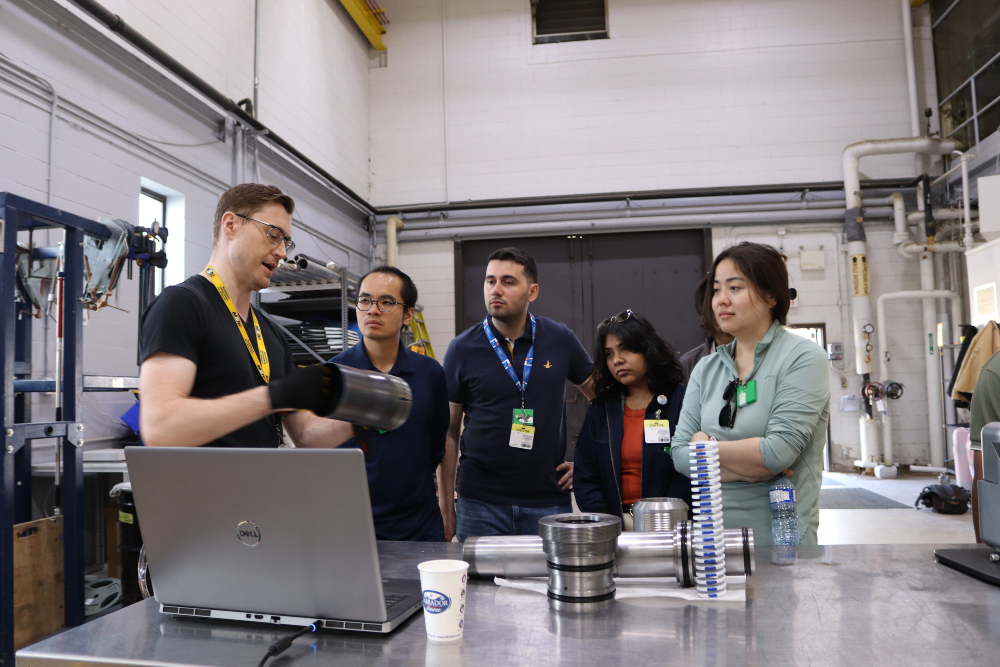
Ontario Tech University graduate students explore the future of nuclear innovation at Canadian Nuclear Laboratories